

Politically, Fidesz stands to gain a lot by giving suffrage to newly minted Hungarian citizens across the border. Still, the opposition will be in a tough spot because Fidesz is right to argue that generally speaking, citizenship does not tend to be decoupled from suffrage.
More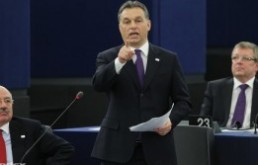
The prime minister’s appearance in Strasbourg to introduce the Hungarian rotating presidency of the European Union yielded mixed results. From the government’s perspective, it is likely that what we posit was the overall goal – i.e. appealing to the Fidesz base at home without causing a serious backlash in Strasbourg – was achieved.
More
With the release and rapid removal from the internet of further recordings related to the UD Zrt. affair, the scandal that erupted two years ago came back into the limelight.
More
For months critics of the government’s more drastic measures have predicted that Fidesz will draw fire from the EU.
More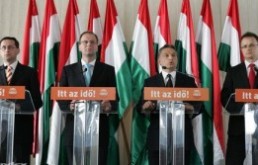
The end of the year is traditionally the time to compile top 10 lists. We gathered for a somewhat subjective list the top ten most important policies and measures enacted by the Fidesz-government since it took power.
More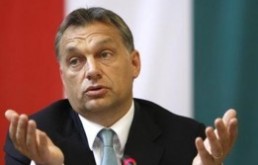
For a few days Moody’s rating downgrading provided ammunition to everyone in the intensifying communication warfare. But while both sides of the political aisle engaged in mutual recriminations regarding the other side’s hypocrisy, a discussion of the underlying issues – whether the downgrading made sense and what impact it might have – fell by the...
More
Along with the public opinion research company Median, Policy Solutions took the opportunity to explore both, the public's view of the future Hungarian presidency and EU membership in general. While Hungarians may be slightly more sceptical towards the Union than a couple of years ago, overall they remain supportive of membership and optimistic abo...
More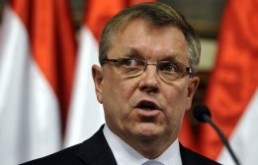
In light of the opposition’s weakness, the government has chosen to go after new opponents: the working middle-classes. The effective nationalisation of mandatory private pension funds has aroused the ire of even many Fidesz-loyalists in this group, in which the governing party has been popular.
More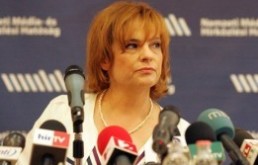
The new media supervision law is stricter than the previous legislation, but by no means marks the end of the freedom of the press. As in many other areas, Fidesz thus far has not moved to advance its power by changing the legislative framework but rather by placing party loyalists in various independent positions.
More
With Fidesz’ former education minister Zoltán Pokorni launching a frontal assault on Christian Democratic education policy, the key question is whether Pokorni is just an old-timer with little to lose or whether he remains a well-connected figure whose pronouncements mark a warning to the KDNP’s ambitious education policy-maker Rózsa Hoffmann that...
More